Showing posts with label Chagall Lithography. Show all posts

Thursday, November 20, 2014

What is a Proof? Artists Proofs and Printer's Proofs


Art collectors often ask our gallery about this topic, so today we are going to shed some light on the differences between different proofs and the printed edition.


What is a Limited Edition?
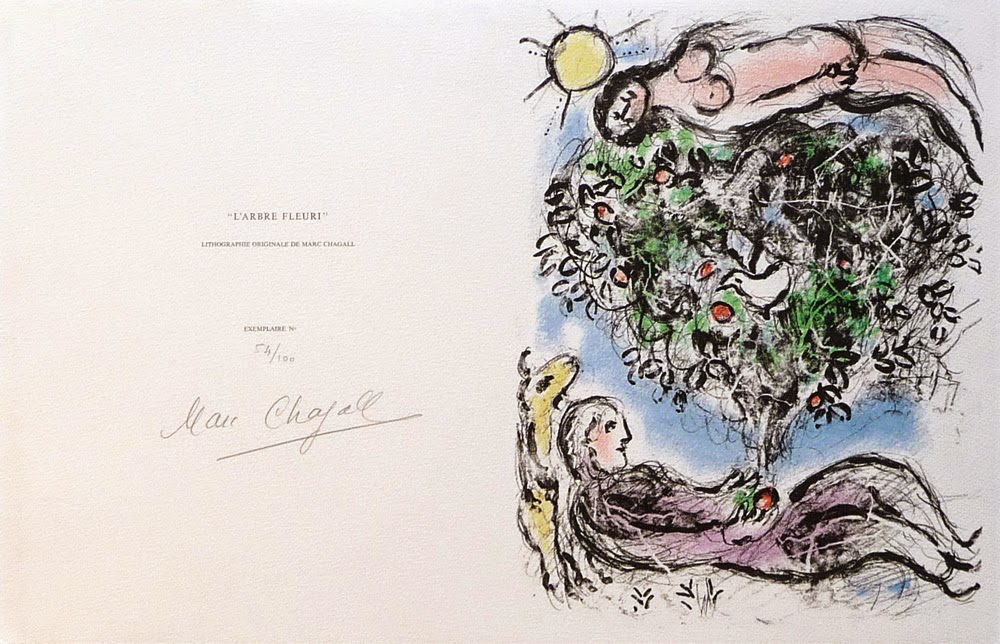
 
http://denisbloch.com/object.php/1285/marc-chagall-arbre-fleuri-lithograph-mourlot-915-louvre-catalogue
Marc Chagall "L'Arbre Fleuri I" - Lithograph - Edition of 100

When an artist prints a limited edition original print, such as a: lithograph, etching, aquatint, carborundum, screenprint, linocut, or woodcut, a set number of identical prints are made. This set number is the "Edition Size," and these will generally be numbered sequentially and hand-signed by the artist. An edition size can vary from extremely small editions of 5 to large editions of 1,000 or more. Open editions have an unknown or unlimited quantity of prints.


http://denisbloch.com/object.php/1104/joan-miro-la-magie-quotidienne-dupin-271-etchings-for-sale
Joan Miro "La Magie Quotidienne" - Etching - Edition of XV on Japon

Sometimes there are different editions printed on different kinds of paper. As an example there may be a regular edition on Arches paper with a limit of 100. These 100 prints are signed and numbered sequentially from 1/100 to 100/100.  In addition to this edition on Arches paper, a smaller edition of 15 are printed on Japon paper and numbered sequentially in roman numerals from I/XV to XV/XV and signed by the artist. This brings our total edition, to 115 prints + any additional proofs that may exist.

So What is a Proof?


A proof is usually an identical print to the regular edition, that is printed at the same time - but is not part of the numbered sequence. This is known as a "Proof Aside from the Edition," and these may or may not be hand-signed by the artist. In general with any edition printed there can be anywhere from 5-50 extra proofs aside from the edition.

Pablo Picasso "Farol (B. 945)" - Linocut - Epreuve d'artiste

Often these extra proofs are retained for the artist, otherwise known as an "Artist Proof". An artist proof can be annotated "A.P." for Artist Proof, or "E.A." in French "Epreuve d'artiste". Sometimes artists can additionally dedicate and gift a proof to a friend, collaborator, dealer, printer, or even family member.


Zao Wou-ki "En Attendant un Jour de Fete (250b)" - Etching - BAT with notes
A "Printer's Proof" designated as "P.P." is much the same, an extra proof made aside of the numbered edition retained by the printer or atelier. The "P.P." can also sometimes stand for "Publisher's Proof". The printer's proof is usually for approval by the master printer to ensure the quality of the printing, and can sometimes include notes and annotations about the printing process. The "BAT" or "Bon à Tirer" is a kind of printer's proof, normally use as a control example against which the other impressions are compared. Bon à Tirer is French for "Good to Print" and is also kept by the Printer or Atelier studio.


Sam Francis "Untitled I (TP)" - Etching - Color Trial Proof

 
Another kind of proof is the "Trial Proof" annotated "T.P." The trial proof is essentially a test proof, often to test colors or the final look of the composition. It is sometimes also referred to as a "working proof" by which the final composition of an edition has not yet been realized. Trial proofs are often thought of as unique prints as they are a one-of-a-kind version of the composition. Art historians, curators, and collectors view working proofs as especially desirable because of their rarity, and the insight they may give into the progress of the work.

http://denisbloch.com/object.php/556/marc-chagall-le-peintre-devant-le-village-mourlot-604
Marc Chagall "Le Peintre devant le Village II" - Lithograph - HC aside from edition

The last form of a "Proof" is the "H.C." which stands for the French term "Hors Commerce" or "Not for Sale". These are exactly as they sound, identical proofs to the regular edition that are not intended to be sold. Prints designated H.C. are often given to the project collaborators as a form of appreciation or partial payment.

Total Tirage

Marc Chagall Catalogue Raisonne Description

"Tirage", the French term meaning "output," is the total number of prints printed for an edition, including any proofs, APs, PPs, HC, and TPs. It is important to note that not every limited edition includes all of these, and the complete number of prints within a tirage are usually described in the artist's Catalogue Raisonné. Some artists and editions are catalogued very well and include full descriptions of the tirage, while others may have basic information only about the numbered edition.


For more information about printmaking and collecting original prints please visit our website:


Tuesday, September 6, 2011

A smARTer Investment

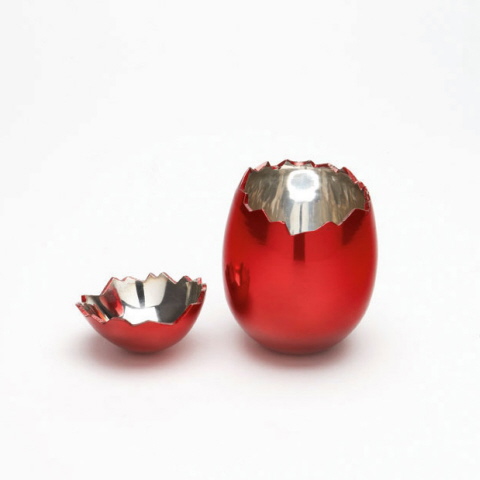
Jeff Koons, Cracked Egg (Red), 2008
If you’d added a few fine artworks to your portfolio over the last few years, instead of all those bank stocks, your retirement nest egg might be looking a little different right now.

Let’s face it, the stock market rollercoaster, particularly in the last month has left the average investor nauseous and contemplating getting off the ride all together (if not already). In many cases the market volatility has driven investors to alternative investment markets like gold and Fine Art.

Fine Art has been an attractive investment for centuries and is becoming increasingly recognized as it has outperformed more conservative investments over the last few decades. It is an alternative investment earning capital gains rather than a dividend.

Indeed, for the last ten years, the price index of all Fine Art works sold more than once worldwide has produced a nearly 11% annualized return, outperforming the Standard & Poor’s 500 index of large cap stocks and most other asset classes, including bonds and commodities.

Marc Chagall, Multiflore, 1974
Fine Art, including paintings, sculpture, original prints and photography is a very interesting long-term asset class. Indeed, investment-grade art enjoys a low correlation with other asset classes, including stocks and bonds, strengthening its case as a candidate for portfolio diversification. And some maintain they can act as an inflation hedge, since “real assets” (like gold) tend to rise in value while the value of money falls.
Since the end of World War II the value of Fine Art works has appreciated enormously. Quality works of art have proved to be a remarkable store of value. This is predominantly due to increasing rarity caused by an expanding demand from museums and collectors, and dwindling supplies.

Before you even think about putting down money, however, it’s important to educate yourself on the forces affecting the art market overall. The best advice is to talk to seasoned collectors and professionals in the industry. Go to the galleries and ask questions. Get involved with the museum and befriend the curator. An educated consumer is going to be best equipped to maneuver in this marketplace.

If, as it is more likely the case, you want to invest your money in something that you also like the look of,
(which I recommend!), make sure that your heart doesn’t rule your head and you buy something that looks pretty but is unlikely to ever accrue in value or worse yet decrease.

On that note, beware of galleries and dealers promoting artists with niche bubble markets. There is a reason we have not seen some very “popular” commercial artists in any major Contemporary Museums – the following of these types of artists is purely promotional, and their value is backed by the people marketing them, not by an actual global market. Over time these types of mega-marketed commercial artists will fall victim to the tastes of the market and will be virtually worthless.

Jim Dine, Fortress of the Heart, 1981-82
It is important to note that the high end of the market is not at the mercy of public taste. The art market has its blue-chip investments (museum artists) and these quality investments will bring a reliable return. Of course, the entry point can be higher. Artwork that emanates from more mature markets, such as Museum Class Master Paintings, can cost anywhere from $10,000 to many millions depending on the artist.


Picasso Linocuts featured at the MOMA 2009
The alternative is the investment in Museum Class Master Graphics or Original Prints with an entry point in the $1,000 level. Of course even great Prints are now expensive, but I’d recommend those! The best ones generally increase in value the most. From a return on investment standpoint, it’s also good advice to buy the best piece you can afford. The market has become much more selective, with an emphasis on quality.

Saturday, February 5, 2011

Marc Chagall - The Story of Exodus


Exodus - "God parted the clouds... "(M467)


Marc Chagall and Lithography

Marc Chagall was introduced to original lithography by Fernand Mourlot, owner of the renowned Mourlot Atelier lithographic studio located in Paris, France. Marc Chagall worked closely with Master Printer Charles Sorlier and over the next 35 years, Chagall created over 1,000 original lithographs at the Atelier Mourlot. The partnership between Marc Chagall and Charles Sorlier was extremely fruitful. . Charles Sorlier advised Chagall on all his future color lithograph projects and supervised their printing at the Mourlot Studio:
  

Marc Chagall
"Marc Chagall fabricated a mystical world of lovers, musicians and artists in his work. Chagall chose lithography as a print medium that could offer him almost unlimited painterly freedom to explore this world. Since lithography is a technique where the artist can work directly on the printing plate or lithostone, the resultant prints convey the spontaneity of Chagall’s brushstrokes and drawn lines. Lithography also allowed Chagall to work in lush color, which he viewed as his métier, and for which Chagall has become renowned. Chagall's lithographs are now among the most collected art works of the 20th century."
                                                                  – Charles Sorlier

While working with Charles Sorlier and Mourlot, Chagall completed many lithographic series including The Bible, The Story of Exodus, The Circus, Daphnis and Chloe and The Odyssey. Chagall used up to 25 different lithographic plates per print to achieve the perfect expression of color. Over the course of his lifetime, Marc Chagall continued to be fascinated with color lithography as a printmaking medium and retained the Mourlot Atelier and especially Charles Sorlier as his creative collaborators.

Marc Chagall and The Bible

   
Exodus "Moses and
the Burning Bush" (M447)
Raised in a remote village in present day Belarus, Marc Chagall’s Jewish heritage proved to be one of the major influences in Marc Chagall’s Art. Chagall’s art is characterized by imagery drawn from the quaint Jewish village including animals from Chagall’s childhood, his strong family heritage, and the Jewish faith and practice. Chagall endeavored to express the spiritual meaning and moral messages found in Biblical teachings through his paintings, lithography, etchings, and original prints.


Exodus - "Bezaleel and
his Golden Cherubim" (M464)
“Ever since my earliest youth I have been fascinated by the Bible. The Bible is the echo of nature, and this I have endeavored to transmit. . . . In art everything is possible, so long as it is based on love.” – Marc Chagall

In 1966, Marc Chagall created a series of original lithographs depicting the biblical Story of the Exodus. The Story of Exodus portfolio contained 24 large color lithographs. 23 of The Story of Exodus Lithographs were printed on paper measuring 50 x 37 cm and the last original print was created as a double-size plate with a centerfold. The Story of Exodus was created in a limited edition consisting of 285 portfolios signed on the justification page by Marc Chagall: 250 on Velin d'Arches numbered from 1 to 250; 20 on Japon Nacre paper; and 15 hors commerce (not for sale) lettered A to O reserved for project collaborators.

 
Exodus - "Moses Calls Down the
Waters Upon the Eqyptians" (M453)
 The name Exodus means "going out" or “departure". It refers not only to one of the most important events of the book Exodus (the Exodus of the Israelites from Egypt), but also to other highly significant events as well, such as the call of Moses and God’s covenant with the nation Israel at Sinai - an experience culminating in God’s giving of the moral law (Ten Commandments) through Moses to the people. Portraying one of the most important stories of The Old Testament, and one of the central figures in the Jewish faith, Chagall’s Story of Exodus is a brilliant series with vivid color illuminating the spiritual and emotional nature of the story.


Exodus - "Moses Shows the
Elders the Tablets of the Law" (M457)
Often Marc Chagall would travel to foreign countries for inspiration for his artwork. Prior to creating The Story of Exodus, Chagall made a personal and spiritual journey to Palestine and present day Israel. Chagall wanted to experience the land and culture of the birthplace of Judaism. Chagall’s time spent in the Middle East influenced all of his biblically themed works, including the Exodus Series as well as the Bible Series.
  
Exodus - "Then
Came Alamek" (M456)

“I saw the hills of Sodom and the Negev, out of whose defiles appear the shadows of our prophets in their yellowish garments, the color of dry bread. I heard their ancient words. . . . Have they not truly and justly shown in their words how to behave on this earth and by what ideal to live?” – Marc Chagall

Marc Chagall’s illustrations of The Story of Exodus are magnificent examples of Chagall’s masterful use of vibrant color to create lush depth, texture and emotion. The Exodus lithographs were highly acclaimed at their time of release and remain one of Chagall’s most popular series due to their expert use of color and fervent imagery.

 
Exodus - "Moses Sees the
Suffering of his People" (M446)
“Changes in societal structure and in art would possess more credibility if they had their origins in the soul and spirit. If people read the words of the prophets with closer attention, they would find the keys to life.”
  - Marc Chagall


To view our collection of available Marc Chagall Prints
please visit our website: