Showing posts with label MOCA. Show all posts

Tuesday, September 6, 2011

A smARTer Investment

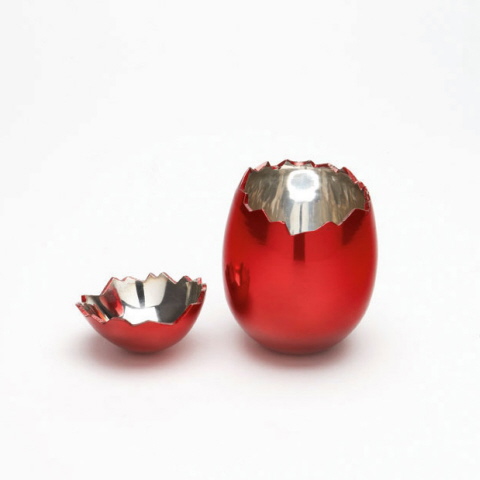
Jeff Koons, Cracked Egg (Red), 2008
If you’d added a few fine artworks to your portfolio over the last few years, instead of all those bank stocks, your retirement nest egg might be looking a little different right now.

Let’s face it, the stock market rollercoaster, particularly in the last month has left the average investor nauseous and contemplating getting off the ride all together (if not already). In many cases the market volatility has driven investors to alternative investment markets like gold and Fine Art.

Fine Art has been an attractive investment for centuries and is becoming increasingly recognized as it has outperformed more conservative investments over the last few decades. It is an alternative investment earning capital gains rather than a dividend.

Indeed, for the last ten years, the price index of all Fine Art works sold more than once worldwide has produced a nearly 11% annualized return, outperforming the Standard & Poor’s 500 index of large cap stocks and most other asset classes, including bonds and commodities.

Marc Chagall, Multiflore, 1974
Fine Art, including paintings, sculpture, original prints and photography is a very interesting long-term asset class. Indeed, investment-grade art enjoys a low correlation with other asset classes, including stocks and bonds, strengthening its case as a candidate for portfolio diversification. And some maintain they can act as an inflation hedge, since “real assets” (like gold) tend to rise in value while the value of money falls.
Since the end of World War II the value of Fine Art works has appreciated enormously. Quality works of art have proved to be a remarkable store of value. This is predominantly due to increasing rarity caused by an expanding demand from museums and collectors, and dwindling supplies.

Before you even think about putting down money, however, it’s important to educate yourself on the forces affecting the art market overall. The best advice is to talk to seasoned collectors and professionals in the industry. Go to the galleries and ask questions. Get involved with the museum and befriend the curator. An educated consumer is going to be best equipped to maneuver in this marketplace.

If, as it is more likely the case, you want to invest your money in something that you also like the look of,
(which I recommend!), make sure that your heart doesn’t rule your head and you buy something that looks pretty but is unlikely to ever accrue in value or worse yet decrease.

On that note, beware of galleries and dealers promoting artists with niche bubble markets. There is a reason we have not seen some very “popular” commercial artists in any major Contemporary Museums – the following of these types of artists is purely promotional, and their value is backed by the people marketing them, not by an actual global market. Over time these types of mega-marketed commercial artists will fall victim to the tastes of the market and will be virtually worthless.

Jim Dine, Fortress of the Heart, 1981-82
It is important to note that the high end of the market is not at the mercy of public taste. The art market has its blue-chip investments (museum artists) and these quality investments will bring a reliable return. Of course, the entry point can be higher. Artwork that emanates from more mature markets, such as Museum Class Master Paintings, can cost anywhere from $10,000 to many millions depending on the artist.


Picasso Linocuts featured at the MOMA 2009
The alternative is the investment in Museum Class Master Graphics or Original Prints with an entry point in the $1,000 level. Of course even great Prints are now expensive, but I’d recommend those! The best ones generally increase in value the most. From a return on investment standpoint, it’s also good advice to buy the best piece you can afford. The market has become much more selective, with an emphasis on quality.

Tuesday, March 30, 2010

MOCA: What do the next 30 years hold?

Celebrating its 30-year-anniversary the Los Angeles Museum of Contemporary Art has compiled an admirable retrospective that superlatively tributes a rich artistic history starting from post World War II to the present, but from a perspective that is uniquely L.A. Like looking back through old school yearbooks, the expansive exhibition in two parts, highlights artists like: Roy Lichtenstein, Andy Warhol, Jean Michel Basquiat, Sam Francis, Robert Rauchenberg, Edward Rucha, Antoni Tapies, Ellsworth Kelly, and Barnett Newman, to name a few from our gallery collection. Impressive hardly begins to describe this compendium, and the breadth of influence of the MOCA has never been so pronounced.
This leaves an interesting question at hand: How will the MOCA fair over the NEXT 30 years?

It’s no secret that the last year has been turbulent for the museum and its trustees, filled with messy financial predicaments and exigent correlating choices, the most recent being the appointment of Jeffrey Deitch as the new Museum Director. When the museum board announced in January that the infamous SoHo Art Dealer was to take over the position, the public reacted with grave apprehensions that his market-oriented approach might take the museum out of the frying pan and into the fire.

There have been ample critiques of Deitch’s eligibility including the latest ethical accusations and censure of his plan to consolidate any unsold works from Deitch Project with his private collection. In response to the uproar over his intimation that he would continue to sell works from his private collection after beginning his post on June1st, the museum board released this statement: "The trustees understand that Jeffrey is a collector and that he may occasionally sell works from his private collection from time to time in compliance with his employment contract, and the museum's and the AAM and AAMD guidelines.”


There is no doubt that Mr. Deitch is about to become a tremendously powerful man in the art-world. Once a VP of Citibank, and a Harvard MBA grad, it is evident that he was hand-picked for his abilities as a businessman over his curatorial aptitude, although he has proven proficiency in both. Deitch is no dummy, he knows the inner workings of art and money, artists and collectors, institutions and the public, and most of all he offers a different approach. In spite of the current denigration over his collection (bear in mind most Museum Directors have private collections, but few are scrutinized for them), Jeffrey Deitch has the real possibility of turning the museum around. He has everything he needs to lead the Museum into its next 30 years. Now all he needs is the public.

~Vanessa Villegas
http://www.denisbloch.com/