Showing posts with label Latin American Masters. Show all posts

Thursday, March 6, 2014

Francisco Toledo - Arte Grafica


Francisco Toledo, Nesting Birds, 2009
The Art of Francisco Toledo is deeply influenced by Toledo´s Mexican heritage. Many of Francisco Toledo´s artworks illustrate his Oaxacan roots, exemplified by Toledo´s paintings, sculptures, lithographs, etchings, and drawings of Mexican animals and scenery as well as Mexican History & Mythology.

Mexican artist, Francisco Toledo, was born in Oaxaca, Mexico in 1940. At the age of 12, Francisco Toledo learned the art of engraving at the Escuela de Bellas Artes de Oaxaca. Under the instruction of Guillermo Silva Santamaria at the Centro Superior de Artes Aplicadas del Instituto Nacional de Bellas Artes, Francisco Toledo continued his studies of the graphic arts including: etching, lithography, and engraving.

Francisco Toledo, Sapos Con Frijoles, Etching
In 1959, Francisco Toledo had his first solo art exhibition in Mexico City at Galeria Antonio Souza. Soon after, Toledo traveled to Europe where he began to work at the shop of the renowned British printmaker Stanley William Hayter in Paris. In 1963 Francisco Toledo´s first International art exhibitions were held in Paris at the Galerie Karl Flinker and the Daniel Gervis Gallery. By 1965 Francisco Toledo had exhibited his art in Galleries in Switzerland, Germany, England, Norway and the U.S.A.

Francisco Toledo´s first prints exhibition entitled Toledo Obra Grafica was held in 1969 at the Galeria Juan Martin in Mexico City. As an art medium, graphics (original prints) particularly intrigued Toledo from early in his career because of the extraordinary range of effects available through printing and etching. Among Francisco Toledo´s notable graphic artworks, are Toledo´s series of illustrated art books on Mayan myths.

Francisco Toledo's unique artistic aesthetic is based on a fantastic reality that Toledo finds residing in nature and life. Anthropomorphized animals (that are not often associated with beauty, such as insects, toads, and bats) are often the center–point of Francisco Toledo´s original artworks. Always juxtaposing the beautiful (the grain of the paper beneath Francisco Toledo´s washes of watercolor, or how deep the chroma illuminating Toledo´s small gouaches) with the disturbing.

Francisco Toledo, Crabs & Dogs, Lithograph
Francisco Toledo´s social and cultural concerns about his native state led to his life–long participation in the cultural revitalization within the Mexican community. Francisco Toledo became integrally involved in the establishment of a number of cultural and art institutions including: the Casa de la Cultura in Juchitan 1972, the Instituto de Artes Graficas de Oaxaca (IAGO) 1989, Museo de Arte Contemporaneo de Oaxaca (MACO) 1992, Patronato pro Defensa y Conservacion del Patrimonio Cultural y Natural de Oaxaca (PROOAX) 1993, Centro de la Imagen Manuel Alvarez Bravo, the Biblioteca Jorge Luis Borges for the blind in Oaxaca and the Inaugurates Fonoteca Eduardo Mata in the Centro Fotografico Manuel Alvarez Bravo. Francisco Toledo has also received several accolades for his contributions to the Mexican community including, Mexican National Prize in 1998, the Prince Claus Award in 2000, and the Right Livelihood Award in 2005.

In 1980 the Museo de Arte Moderno in Mexico City held a retrospective of Francisco Toledo´s art. Francisco Toledo´s art is found in the permanent collection of major Art Museums across the globe. Francisco Toledo continues his artistic and humanitarian efforts from Oaxaca City, Mexico.

Select Museum & Institutional Collections:

Metropolitan Museum of Art, New York, NY
Museum of Modern Art, New York, NY
Museo de Arte Contemporaneo de Oaxaca, Oaxaca, Mexico
Museo Tamayo, Mexico City, Mexico
Santa Barbara Museum of Art, Santa Barbara, CA
Fundacion Proa, Buenos Aires, Argentina
Museum of Latin American Art, Long Beach, CA

Saturday, February 19, 2011

RUFINO TAMAYO & MIXOGRAFIA PRINTS


Perro de Luna, 1973 LITHOGRAPH
Rufino Tamayo’s legacy to the history of art is truly found in Tamayo’s oeuvre of graphic prints, in which Tamayo cultivated every technique. A truly innovative print-maker, Rufino Tamayo’s graphic work was produced between 1925 and 1991 and includes the mediums of woodcuts, lithographs, etchings, aquatints, and mixografia prints.


NiƱa, 1981 MIXOGRAPH
In the early 1970's, printer Luis Remba approached Rufino Tamayo to produce a series of lithographs. Although Tamayo was interested, he made it clear that he was looking for new horizons within the medium - particularly seeking ways to get more volume and texture into his original prints. Together Luis Remba & Rufino Tamayo expanded the technical and aesthetic possibilities of the graphic arts by developing a new genre of multiples, which they named Mixografia.


Dos Hermanos, 1987 MIXOGRAPH
The Mixografia technique is a unique fine art printing process that allows for the production of prints with three-dimensional texture. The quality of a Mixografia print is similar to that of a fresco or bas-relief, in which the surface of the paper has a kind of sculptural depth. The technique not only registered the texture and volume of Rufino Tamayo's design, but it also granted Tamayo the freedom to use any combination of solid materials in its creation. Rufino Tamayo was delighted with the Mixografia process, and Tamayo created some 80 Original Mixographs over his lifetime.

Due to the inability of commercial paper to withstand the stress of the Mixografia three-dimensional printing technique, a more resilient handmade paper was also invented. The paper of a Mixografia print has a heavy and thick consistency that further enhances the sculptural three-dimensionality of a Mixografia print.


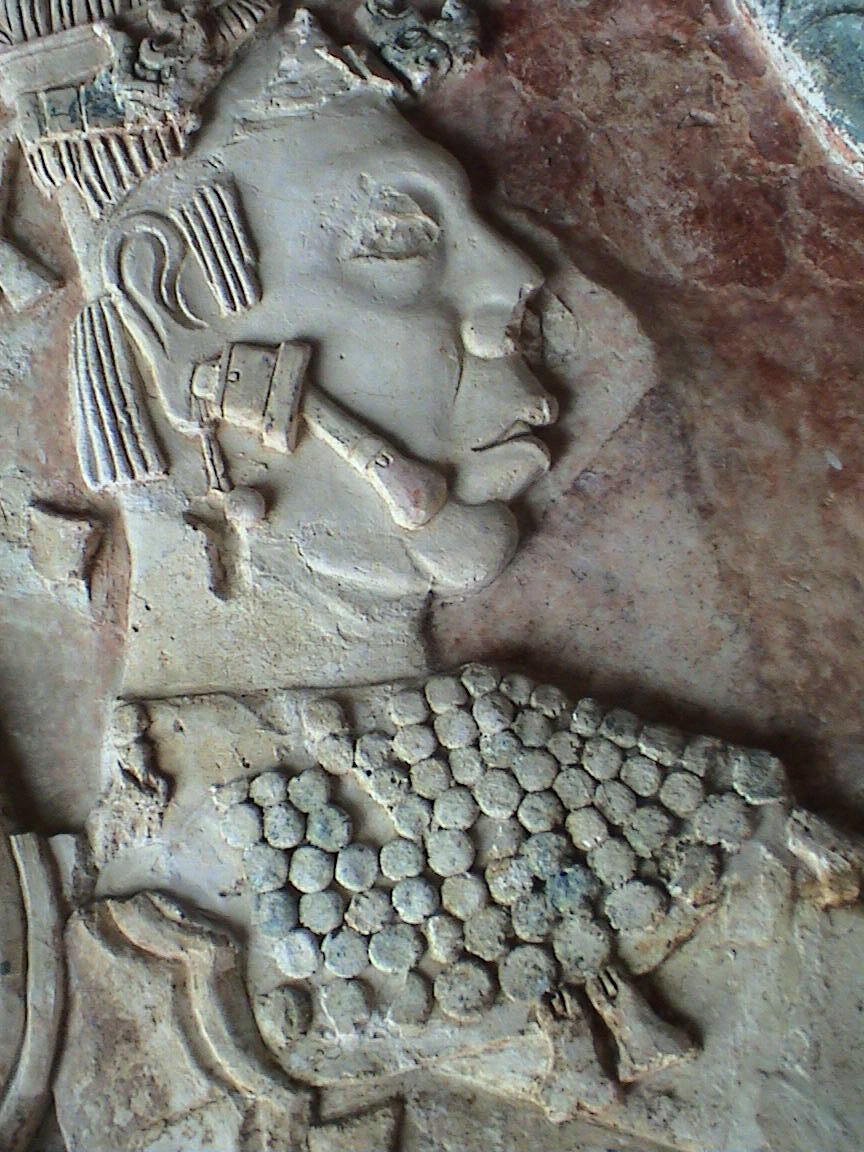
Relief Sculpture from Pelenque Ruins
Greatly influenced by his Mexican and Zapotec heritage, much of Rufino Tamayo’s artwork, particularly Tamayo’s Mixografia prints, illustrate the same weight and feel of Pre-Columbian stone reliefs and sculptures. Rufino Tamayo became interested in Pre-Columbian art as early as 1926, when Tamayo became the head of the department of ethnographic drawing at the National Museum of Archaeology in Mexico City.


Nocturno, 1975 ETCHING
Most of the compositions in Rufino Tamayo’s original graphics are extremely simple yet highly inventive in their technicality. Tamayo was known for taking an elementary drawing and filling it with structural elements, textures and colors obtaining striking etchings, lithographs and mixographs created with eloquent and economical expression.

Hombre, 1979 LITHOGRAPH
Rufino Tamayo was one of the first artists in Latin America to interpret his roots without historicism, anecdote, or proclamation. In doing so, Rufino Tamayo formed one of the most brilliant chapters of the already rich and prestigious field of original graphic art in Mexico.


To view the gallery’s collection of available Rufino Tamayo
Prints please visit our website: