Showing posts with label Pablo Picasso Prints. Show all posts

Thursday, November 20, 2014

What is a Proof? Artists Proofs and Printer's Proofs


Art collectors often ask our gallery about this topic, so today we are going to shed some light on the differences between different proofs and the printed edition.


What is a Limited Edition?
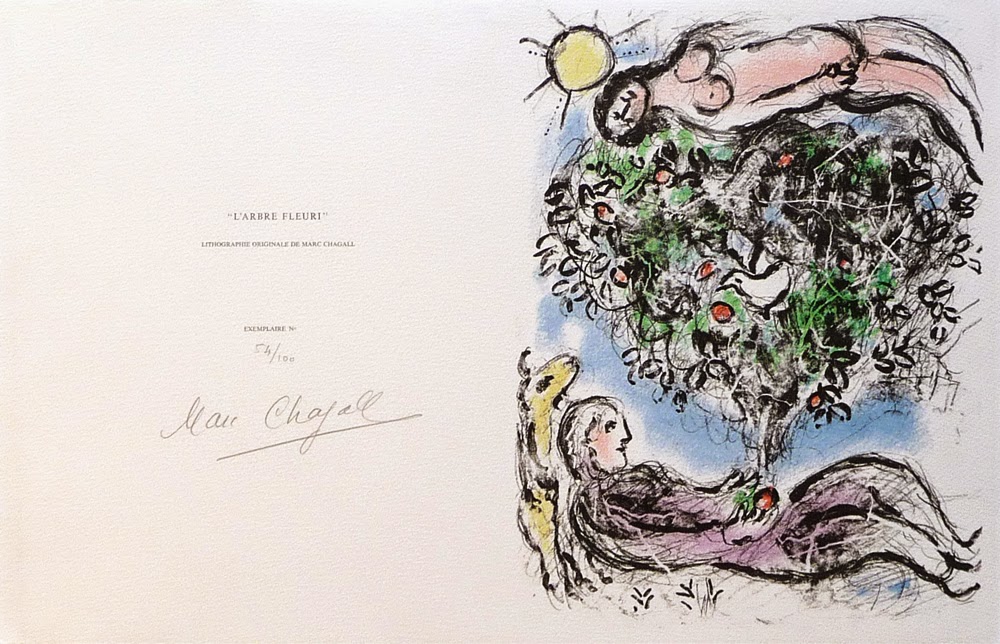
 
http://denisbloch.com/object.php/1285/marc-chagall-arbre-fleuri-lithograph-mourlot-915-louvre-catalogue
Marc Chagall "L'Arbre Fleuri I" - Lithograph - Edition of 100

When an artist prints a limited edition original print, such as a: lithograph, etching, aquatint, carborundum, screenprint, linocut, or woodcut, a set number of identical prints are made. This set number is the "Edition Size," and these will generally be numbered sequentially and hand-signed by the artist. An edition size can vary from extremely small editions of 5 to large editions of 1,000 or more. Open editions have an unknown or unlimited quantity of prints.


http://denisbloch.com/object.php/1104/joan-miro-la-magie-quotidienne-dupin-271-etchings-for-sale
Joan Miro "La Magie Quotidienne" - Etching - Edition of XV on Japon

Sometimes there are different editions printed on different kinds of paper. As an example there may be a regular edition on Arches paper with a limit of 100. These 100 prints are signed and numbered sequentially from 1/100 to 100/100.  In addition to this edition on Arches paper, a smaller edition of 15 are printed on Japon paper and numbered sequentially in roman numerals from I/XV to XV/XV and signed by the artist. This brings our total edition, to 115 prints + any additional proofs that may exist.

So What is a Proof?


A proof is usually an identical print to the regular edition, that is printed at the same time - but is not part of the numbered sequence. This is known as a "Proof Aside from the Edition," and these may or may not be hand-signed by the artist. In general with any edition printed there can be anywhere from 5-50 extra proofs aside from the edition.

Pablo Picasso "Farol (B. 945)" - Linocut - Epreuve d'artiste

Often these extra proofs are retained for the artist, otherwise known as an "Artist Proof". An artist proof can be annotated "A.P." for Artist Proof, or "E.A." in French "Epreuve d'artiste". Sometimes artists can additionally dedicate and gift a proof to a friend, collaborator, dealer, printer, or even family member.


Zao Wou-ki "En Attendant un Jour de Fete (250b)" - Etching - BAT with notes
A "Printer's Proof" designated as "P.P." is much the same, an extra proof made aside of the numbered edition retained by the printer or atelier. The "P.P." can also sometimes stand for "Publisher's Proof". The printer's proof is usually for approval by the master printer to ensure the quality of the printing, and can sometimes include notes and annotations about the printing process. The "BAT" or "Bon à Tirer" is a kind of printer's proof, normally use as a control example against which the other impressions are compared. Bon à Tirer is French for "Good to Print" and is also kept by the Printer or Atelier studio.


Sam Francis "Untitled I (TP)" - Etching - Color Trial Proof

 
Another kind of proof is the "Trial Proof" annotated "T.P." The trial proof is essentially a test proof, often to test colors or the final look of the composition. It is sometimes also referred to as a "working proof" by which the final composition of an edition has not yet been realized. Trial proofs are often thought of as unique prints as they are a one-of-a-kind version of the composition. Art historians, curators, and collectors view working proofs as especially desirable because of their rarity, and the insight they may give into the progress of the work.

http://denisbloch.com/object.php/556/marc-chagall-le-peintre-devant-le-village-mourlot-604
Marc Chagall "Le Peintre devant le Village II" - Lithograph - HC aside from edition

The last form of a "Proof" is the "H.C." which stands for the French term "Hors Commerce" or "Not for Sale". These are exactly as they sound, identical proofs to the regular edition that are not intended to be sold. Prints designated H.C. are often given to the project collaborators as a form of appreciation or partial payment.

Total Tirage

Marc Chagall Catalogue Raisonne Description

"Tirage", the French term meaning "output," is the total number of prints printed for an edition, including any proofs, APs, PPs, HC, and TPs. It is important to note that not every limited edition includes all of these, and the complete number of prints within a tirage are usually described in the artist's Catalogue Raisonné. Some artists and editions are catalogued very well and include full descriptions of the tirage, while others may have basic information only about the numbered edition.


For more information about printmaking and collecting original prints please visit our website:


Friday, June 20, 2014

Art Terms Decoded: What does "Stoned Signed" or "Plate Signed" Mean?

Andy Warhol "Marilyn Monroe Castelli Invitation" signed in felt pen.
 
As you begin to delve deeper into the world of fine art collecting you will find that one of the most important indicators of value and potential worth is the artist's signature. Some might even say that this is the most important aspect of an artwork that makes it a desirable luxury commodity.

The reasoning behind the incredible value of the artist's signature above all else, is that a signature is the easiest way to determine the authenticity of a work of art. Many have tried to fake the signature of the great master artists throughout time and sometimes people are fooled - but often expert art dealers, gallerists, curators and appraisers are able to catch a fraudulent mark. A fake signature automatically calls in question the authenticity of the work itself whether it is a painting or original
print.
 

Picasso "Le Vieux Roi" hand-signed in Blue
Picasso "Le Vieux Roi" Plate Signed in Red

From a pure collectorship stand point a hand-signed artwork is going to be the most valuable investment. That is not to say that an unsigned artwork does not have value, it just means the MOST valuable artworks are hand-signed ones.
 
Picasso "Ronde de la Jeunesse" Signed in the Stone
So this brings us to our term "Plate Signed" sometimes also known as "Stone Signed". A plate signed work is specifically referring to an original print or graphic on paper with a printed signature. This is precisely what it sounds like; a plate signature is a signature that is part of the composition and is printed along with the art image. As an example scenario: Pablo Picasso draws an etching composition onto a metal plate - he then signs the plate and dates it - the plate is inked and pressed onto paper and along with his etching Picasso's signature is printed. This would be a "plate signed" original etching.
 
The term "stone signed" is exactly the same but specifically references the stone slabs that might have been used to create an original lithograph. Sometimes artist catalogue raisonnes reference that an edition is "sign in the stone," which is also the same. 
 
The most important take-away in terms of collecting a plate or stoned signed artwork is that it is not equivalent to a hand-signed work and should be valued as such.
 
You can see more of our hand-signed, plate signed, and stoned signed original prints on our website:

Saturday, October 26, 2013

IS ART A GOOD INVESTMENT?


There are a number of indicators that prove that Fine Art, carefully selected, can be a lucrative commodity investment. Art is one of the most enticing hard asset investments, as collectors have created a hefty supply and demand system throughout the years.

According to Michael Moses, a retired New York University business school professor who co-
Marc Chagall
created the Mei Moses World All Art Index, over the past 60 years, the total return on fine art has been very similar to the return on the S&P 500-stock index. "If you use the last 30 years, the S&P substantially outperforms art," Moses says. "If you look at the most recent eight [to] 10 years, art has outperformed the S&P."


Another reason to consider investing in Art is that Fine Art has a proven track record as a good choice during hard times. Fine Art is more or less resilient to times of economic turmoil and trouble. It has outperformed during all of the wars of the 20th century, and has outperformed during the last 27 recessions. One of the biggest draws to this asset class is the fact that there is no underlying financial market to tinker with prices. There will never be a bad trade or a flash crash that will suddenly erase the value of your art investment. Though it is not a guarantee, Art also has the potential to appreciate with time.


The last and perhaps most rewarding aspect of collecting Fine Art are the emotional and aesthetic rewards. Because Art is a physical asset class, your investment is something that you can potentially enjoy every day.


COLLECTING THE RIGHT ARTIST

The greatest draw back to investing in fine art is the relative unpredictability of the performance an artist’s body of work might have. Like other markets there are artists and artworks that are highly unlikely to retain or develop future value, and so it is very important as a beginning collector to be highly selective of the artists you collect. The best advice is that you select artists with established markets. A blue-chip artist would have a major following, specifically by academic and museum interest. The Artist is your best indicator for potential value.

Pablo Picasso
Normally a museum artist like Picasso, Warhol, or Hockney would be out of range for the average
collector, but through the limited edition prints market you can attain these artists for a few thousand dollars as opposed to a few million. Many collectors and art dealers will tell you that originals will always perform better than prints, and this is half true. The original paintings for Pablo Picasso or Damien Hirst will always outperform the graphic artworks for these artists certainly, and if you have the capital to invest in high-level paintings of Museum Masters, I strongly recommend that this is the market you seek. However, an original painting by an immerging and unknown artist vs. an establish master’s print will not necessarily hold value or outperform the print. The performance of an original painting depends heavily on the current market and demand for the artist.


COLLECTING THE RIGHT PIECE

Aside from the Artist, other excellent indicators of future potential rest on the work itself. It is true that some compositions are simply more aesthetic than others. Some artworks may bear iconic images and characteristics of an artist’s specific period or style. It can be beneficial to research an artist’s backstory, as it can have a fair amount of weight in the resale value of a piece. Additionally if you are collecting sculptures or original prints the edition sizes can also play a major factor. When deciding what art to buy, the most important is that you enjoy and appreciate the art.


Tuesday, September 6, 2011

A smARTer Investment

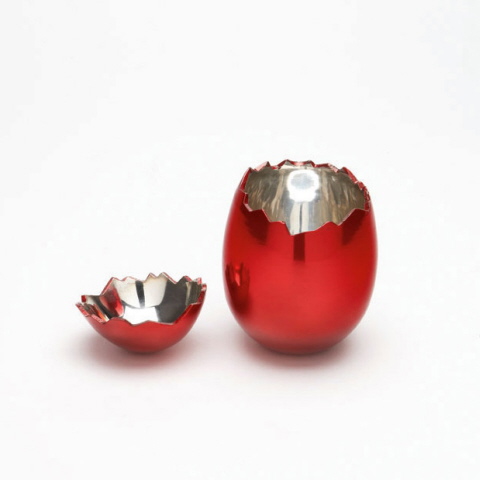
Jeff Koons, Cracked Egg (Red), 2008
If you’d added a few fine artworks to your portfolio over the last few years, instead of all those bank stocks, your retirement nest egg might be looking a little different right now.

Let’s face it, the stock market rollercoaster, particularly in the last month has left the average investor nauseous and contemplating getting off the ride all together (if not already). In many cases the market volatility has driven investors to alternative investment markets like gold and Fine Art.

Fine Art has been an attractive investment for centuries and is becoming increasingly recognized as it has outperformed more conservative investments over the last few decades. It is an alternative investment earning capital gains rather than a dividend.

Indeed, for the last ten years, the price index of all Fine Art works sold more than once worldwide has produced a nearly 11% annualized return, outperforming the Standard & Poor’s 500 index of large cap stocks and most other asset classes, including bonds and commodities.

Marc Chagall, Multiflore, 1974
Fine Art, including paintings, sculpture, original prints and photography is a very interesting long-term asset class. Indeed, investment-grade art enjoys a low correlation with other asset classes, including stocks and bonds, strengthening its case as a candidate for portfolio diversification. And some maintain they can act as an inflation hedge, since “real assets” (like gold) tend to rise in value while the value of money falls.
Since the end of World War II the value of Fine Art works has appreciated enormously. Quality works of art have proved to be a remarkable store of value. This is predominantly due to increasing rarity caused by an expanding demand from museums and collectors, and dwindling supplies.

Before you even think about putting down money, however, it’s important to educate yourself on the forces affecting the art market overall. The best advice is to talk to seasoned collectors and professionals in the industry. Go to the galleries and ask questions. Get involved with the museum and befriend the curator. An educated consumer is going to be best equipped to maneuver in this marketplace.

If, as it is more likely the case, you want to invest your money in something that you also like the look of,
(which I recommend!), make sure that your heart doesn’t rule your head and you buy something that looks pretty but is unlikely to ever accrue in value or worse yet decrease.

On that note, beware of galleries and dealers promoting artists with niche bubble markets. There is a reason we have not seen some very “popular” commercial artists in any major Contemporary Museums – the following of these types of artists is purely promotional, and their value is backed by the people marketing them, not by an actual global market. Over time these types of mega-marketed commercial artists will fall victim to the tastes of the market and will be virtually worthless.

Jim Dine, Fortress of the Heart, 1981-82
It is important to note that the high end of the market is not at the mercy of public taste. The art market has its blue-chip investments (museum artists) and these quality investments will bring a reliable return. Of course, the entry point can be higher. Artwork that emanates from more mature markets, such as Museum Class Master Paintings, can cost anywhere from $10,000 to many millions depending on the artist.


Picasso Linocuts featured at the MOMA 2009
The alternative is the investment in Museum Class Master Graphics or Original Prints with an entry point in the $1,000 level. Of course even great Prints are now expensive, but I’d recommend those! The best ones generally increase in value the most. From a return on investment standpoint, it’s also good advice to buy the best piece you can afford. The market has become much more selective, with an emphasis on quality.

Tuesday, November 23, 2010

Le Repas Frugal (The Frugal Meal) by Pablo Picasso

Le Repas Frugal, 1904
Etching
Image: 46.3 x 37.7 cm

Poised between Pablo Picasso’s two most significant periods, Le Repas Frugal (The Frugal Meal) by Pablo Picasso represents a pivotal point in the Pablo Picasso’s printmaking oeuvre. As part of Picasso’s first suite/series of etchings, entitled La Suite des Saltimbanques, Le Repas Frugal contains elements of both Picasso’s Blue Period, marked by its melancholic introspection, and Picasso’s Rose Period, characterized by Pablo Picasso’s fascination with strolling acrobats or players. The bohemian life of those who lived on the edge of society was important to the young struggling Picasso as he too frequented the circus, the theater and music halls to escape from his impoverished lifestyle.


Les Pauvres (Saltimbanques Suite), 1905
Etching
23.6 x 18 cm
The Frugal Meal portrays an iconic image of a starving couple with a meager spread. The nearly skeletal man looks to the side as he comforts his female companion, perhaps denying their dire circumstance and blind with the hope of a better tomorrow. The woman stares with tired but tearless eyes, engaging an empathy that can only be acquired by a human diligently struggling to maintain dignity in the face of destitution. Other etchings from the Saltimbanques Suite also portray these scenes of insolvent social outsiders.


The Frugal Meal
displayed at the MOMA, April 2010
Executed in only two states, The Frugal Meal etching possesses a remarkable confidence and skill that belies Picasso's lack of formal training in printmaking. Having just learnt the etching technique from Ricardo Canals, a fellow resident of Montmartre, it is astonishing that Pablo Picasso produced this icon in the history of printmaking at the age of only twenty-three. Le Repas Frugal is considered one of Pablo Picasso’s masterpieces as a printmaker and was only Picasso’s second work created in the medium. The medium of etching would fascinate Pablo Picasso for the remainder of his life.

First printed in small numbers by the printer Eugene Delatre in 1905, The Saltimbanques etching plates were later acquired by art dealer and publisher Ambroise Vollard. Vollard had the fragile copper plates steel-faced and, in 1913, the edition of 250 was printed by Louis Fort. Together with an additional eleven drypoints and two etchings made by Picasso between 1904 and 1906, these early prints are commonly known as the Saltimbanques Suite.

Le Repas Frugal was recently exhibited at the Pablo Picasso Prints and Paintings exhibition at The Museum of Modern Art, New York. The Frugal Meal is a part of the permanent collections of the following museums and institutions:

The Metropolitan Museum of Art, New York
The Musee Picasso, Paris
The Museo Picasso, Barcelona